Integration of AI Skincare with Smart Home & Wearable Tech: The Future of Personalized Beauty
Empathetic hook
Have you ever felt overwhelmed by the myriad of skincare products and advice out there? You're not alone—many of us have faced the frustration of trying to navigate through an endless sea of options, only to end up with products that don’t suit our unique skin needs. The good news is that with advancements in AI technology, achieving your best skin is becoming more accessible and personalized than ever before.
The Problem: The Skincare Overload Dilemma
The skincare industry has exploded in recent years, with new products and routines emerging almost daily. This influx can lead to a common problem: analysis paralysis. How do you know what works for your skin without investing time and money into countless products? Most consumers are left guessing, often relying on social media influencers or celebrity endorsements rather than scientific evidence.
Moreover, traditional skincare routines can be overly complicated—think of the popular 10-step Korean skincare routine, which, while effective for some, can overwhelm others. This leads to another issue: the risk of damaging the skin barrier due to excessive layering of products. For example, many people unknowingly combine active ingredients that shouldn't be used together, like retinol and vitamin C, leading to irritation and compromised skin health.
Additionally, there’s the question of consistency. How many of us have started a skincare regimen with the best intentions, only to give up after a few weeks due to a lack of visible results? This often stems from not understanding how our skin responds to specific ingredients. Without proper guidance, we may apply products incorrectly or at the wrong times, leading to subpar results at best or skin issues at worst.
The reality is that 90% of skin aging signs are not purely genetic; they are often the result of environmental factors and improper skincare routines. With the rise of smart technology, we have the opportunity to utilize AI-driven insights to cut through the noise and tailor our skincare to our actual needs.
The Science: How AI-Powered Skincare Works
💡 Tired of trial and error with skincare? Kivo.skin helps you understand your skin first.
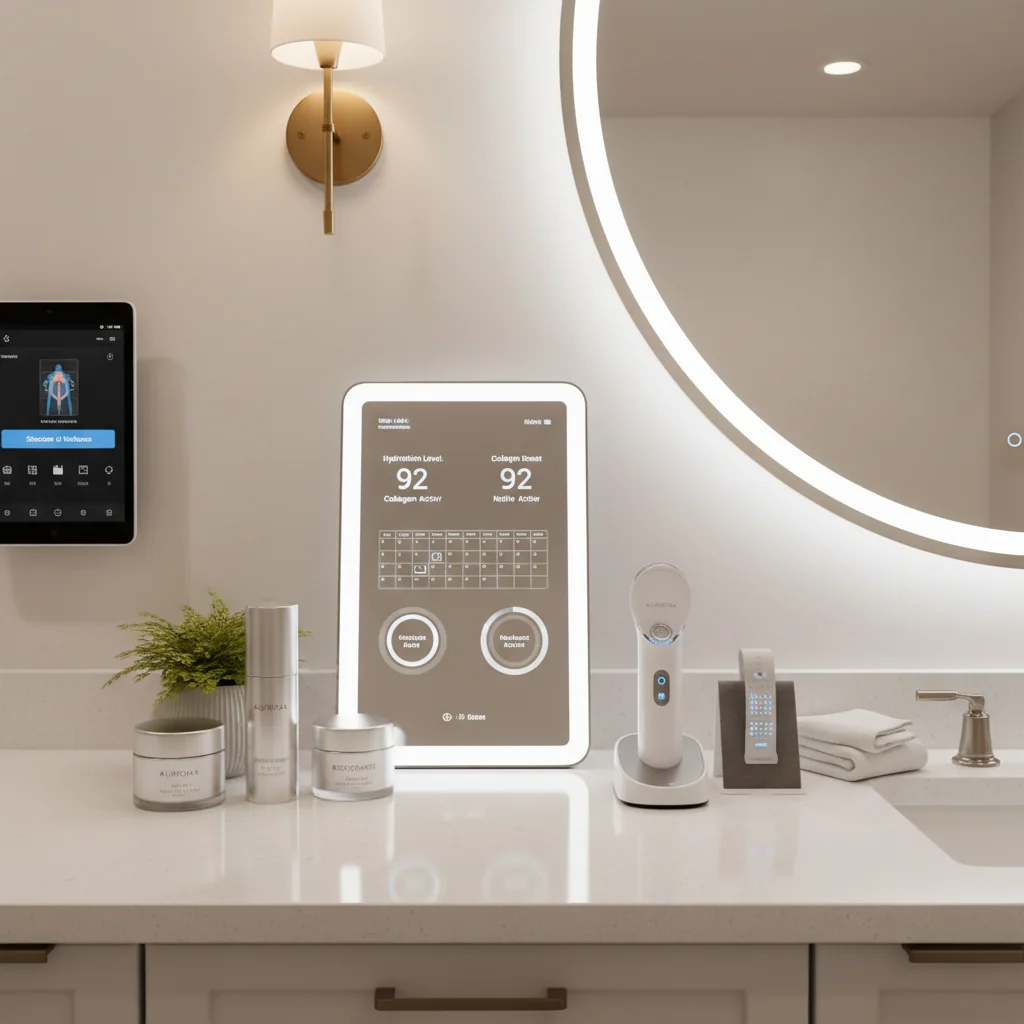
So, what exactly is AI skincare technology? At its core, it combines artificial intelligence with dermatological science to analyze your skin’s condition and recommend tailored skincare solutions. AI skincare smart mirrors and wearable skin trackers can assess everything from moisture levels to pigmentation issues, using sophisticated algorithms to interpret the data.
Mechanism of Action (MoA)
AI skincare devices typically employ a combination of sensors and cameras that capture real-time data about your skin. For instance, a smart mirror might measure hydration levels through non-invasive methods such as electrical impedance. This data is then processed using machine learning algorithms that have been trained on vast datasets, recognizing patterns and correlating them with specific skin types and conditions.
Once the data is analyzed, the system can provide personalized recommendations. For example, if the mirror detects low moisture levels, it may suggest a hyaluronic acid serum. The technology can even adjust recommendations based on environmental factors, like humidity and UV index, which can significantly impact skin health.
A study published in the Journal of Investigative Dermatology found that AI algorithms could diagnose skin conditions with a level of accuracy comparable to dermatologists. This provides a significant advantage for users, as they can receive instant insights and advice without the need for an in-person consultation.
Clinical Studies and Research Findings
Several clinical studies have demonstrated the efficacy of AI-driven skincare recommendations. For instance, researchers from Stanford University developed an AI model that accurately classifies skin cancer with a 91% accuracy rate, which is on par with dermatologists. This technology can also be adapted for assessing general skincare needs, enabling users to receive tailored solutions that are evidence-based.
Moreover, AI skincare technology can be particularly beneficial for individuals with specific skin conditions, such as rosacea or eczema. By continually monitoring skin changes and adapting recommendations, users can manage flare-ups more effectively.
Impact on Different Skin Types and Conditions
AI skincare technology is designed to cater to all skin types, including sensitive skin that may react poorly to certain ingredients. The algorithms can be programmed to recognize these sensitivities and recommend products that are less likely to cause irritation. For example, if a user has a history of reacting to fragrances, the system can automatically filter out products containing these ingredients.
Additionally, AI can help track changes in skin conditions over time, providing valuable data that can inform future skincare decisions. For example, if a user notices that their skin is becoming increasingly oily, the AI can recommend lighter formulations or specific ingredients like salicylic acid to help manage oil production.
Expert Insight: “AI has the potential to revolutionize how we approach skincare by providing personalized insights that are often unattainable through traditional methods,” says Dr. Shereene Idriss, a board-certified dermatologist. “The ability to analyze skin in real-time and adapt recommendations accordingly can lead to better outcomes for patients.”
Why This Works (And Why Others Don't)
While traditional skincare routines often rely on trial and error, AI-driven skincare technology takes a more scientific approach. Instead of guessing which products might work, users can rely on data-driven insights that are tailored to their specific skin needs.
Moreover, many conventional methods fail to consider external factors that can impact skin health, such as pollution, diet, and stress levels. AI skincare solutions, however, can integrate this information into their recommendations, making them more holistic and effective.
For example, while a standard moisturizer may work well for one person, it might not be suitable for someone living in a humid climate where excess moisture can lead to breakouts. AI technology can adapt recommendations based on these environmental variables, ensuring that users receive the right advice at the right time.
The Protocol: Implementing AI Skincare Solutions
Embracing AI skincare technology is not just about having the latest gadgets; it’s about integrating them into a cohesive skincare routine that works for you. Here’s a step-by-step guide on how to implement AI skincare solutions effectively.
Step-by-Step Implementation
Step One: Assess Your Skin Type (with AI device)
- Begin by using an AI-powered smart mirror or wearable skin tracker to assess your skin. This device will provide insights into hydration levels, oiliness, and any pigmentation issues.
- Look for devices that offer detailed reports and recommendations based on your skin type, ensuring that you understand your unique needs.
Step Two: Establish a Baseline Routine (timing: morning and night)
- Based on the initial assessment, establish a basic skincare routine that includes cleansing, moisturizing, and sun protection in the morning, and treatment products like retinoids at night.
- Common mistakes to avoid include skipping sunscreen or layering too many products, which can overwhelm your skin.
Step Three: Monitor and Adjust (what to avoid: overuse of actives)
- Use the AI device regularly to monitor changes in your skin. If the device detects increased oiliness or dryness, adjust your routine accordingly.
- Be cautious not to overuse active ingredients like acids or retinoids, as this can lead to irritation. The AI should guide you on the frequency and type of products to use.
Step Four: Incorporate Targeted Treatments (timing: as needed)
- Depending on your skin’s needs, incorporate targeted treatments like serums or masks. For example, if your skin is showing signs of aging, the AI might recommend a peptide serum.
- Ensure that you’re applying these treatments at the right time—typically at night for reparative products.
Step Five: Regular Updates and Feedback (every 4-6 weeks)
- Schedule regular check-ins with your AI device, ideally every 4-6 weeks, to assess how your skin is responding to the routine. This will allow for timely adjustments based on your skin’s evolving needs.
- Keep a journal of any changes you notice, as this data can enhance the AI’s recommendations.
Step Six: Consult a Professional (as necessary)
- While AI technology can provide valuable insights, it’s important to consult a dermatologist if you notice persistent issues or if you want to explore more advanced treatments.
- The AI can help prepare for this consultation by providing a detailed report of your skin’s condition over time.
Safety Note: Ensure that all products are suitable for your Fitzpatrick skin type. For example, those with Fitzpatrick V-VI should avoid certain strong actives and always conduct patch tests before trying new products.
Common Mistakes and How to Avoid Them
One of the most frequent mistakes people make when using AI skincare technology is failing to follow the recommendations accurately. For instance, if the AI suggests a specific product but the user opts for a different one, they may not see the desired results. It’s crucial to trust the technology and use the products as directed.
Another common error is neglecting to update the AI with changes in skin condition. If you have a breakout or a new concern, failing to report this can lead to outdated recommendations. Regularly engaging with the technology ensures that the guidance remains relevant.
Additionally, many users may overlook the importance of environmental factors. For example, someone living in a polluted urban area may need to adjust their routine to include more antioxidants than someone in a rural setting. AI skincare technology is designed to consider these variables, but only if the user inputs the necessary data.
Lastly, people often underestimate the importance of patience. AI skincare solutions require time to assess and adjust recommendations based on skin changes. Users must be committed to following the routine for several weeks before expecting significant results.
Real Results: What to Expect
When implemented correctly, users can expect to see noticeable improvements in their skin health within a few weeks of starting an AI-driven skincare routine. For those with specific concerns, such as acne or dryness, the technology can provide targeted solutions that yield faster results compared to traditional methods.
Typically, users might notice improvements in hydration levels and texture within the first two weeks, while more significant changes, such as reduced pigmentation or fine lines, may take 6-12 weeks. The key is to remain consistent with the routine and trust the data-driven insights provided by the AI.
How Kivo.skin AI Can Help
At Kivo.skin, we believe in empowering individuals to take control of their skincare journey through technology. Our AI analysis tool can assess your skin condition and recommend personalized products that suit your unique profile. Not sure if your skin is ready for retinol? Our AI analysis will determine your sensitivity and recommend the optimal concentration based on your skin's current condition, climate, and other products you're using.
By integrating Kivo.skin’s AI-powered insights with your skincare routine, you can ensure that you’re making informed decisions that lead to healthier, more radiant skin.
Key Takeaways
- AI skincare technology offers a personalized approach to skincare, utilizing data-driven insights for tailored recommendations.
- Regular monitoring and adapting your skincare routine based on AI assessments can lead to better skin health outcomes.
- Common mistakes include not following AI recommendations accurately and neglecting to update the technology with changes in skin condition.
- Users can expect to see improvements in skin texture and hydration within weeks, with more significant results taking longer.
- Kivo.skin’s AI analysis tool provides a comprehensive understanding of your skin, helping you make informed product choices.
Next step: Ready to transform your skincare routine with personalized insights? Check your skincare protocol with Kivo.skin AI scan.
Join the Inner Circle
Science-backed skincare insights, delivered weekly.